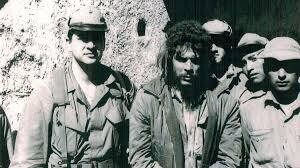
Félix Ismael Rodríguez, a Cuban exile who joined the Central Intelligence Agency (CIA) in the 1960s, recounts his participation in the capture and death of Ernesto "Che" Guevara in Bolivia in 1967. Rodríguez recalls that, as part of the Assault Brigade 2506, he was working for the CIA in Miami when he was recruited for a mission in Bolivia.
Upon arriving in La Higuera with the mission to capture Che, everything changed in the process, Rodríguez says. He claims that Guevara was convinced that nothing would happen to him, but he was abandoned by Cuba and faced his isolation in Bolivia. According to Rodríguez, Che knew he was alone and that Cuba would not support him, which clearly illustrated Fidel Castro's betrayal.
The former CIA agent explains how he became involved in the decision to cut off Che's hands as proof of identity. Despite the tragic situation, Rodríguez maintains that he felt obligated to follow the dictated orders. Reflecting on Che's last moments, he highlights his willingness to make clear whom he respected and whom he did not, as well as his firm stance until the end.
Rodríguez remembers how, despite the circumstances, he treated Che with respect and how they discussed various topics before the execution. He states that, despite the image constructed around Guevara after his death, the reality of his situation at that time was different.
Finally, Félix Rodríguez reflects on the figure of Che Guevara, considering him a betrayed and defeated man, whose image became a much larger myth than his reality. Despite the sadness surrounding those events, Rodríguez insists that he does not regret his participation, as his role was to advise and fulfill the orders received during that turbulent moment in Latin American history.