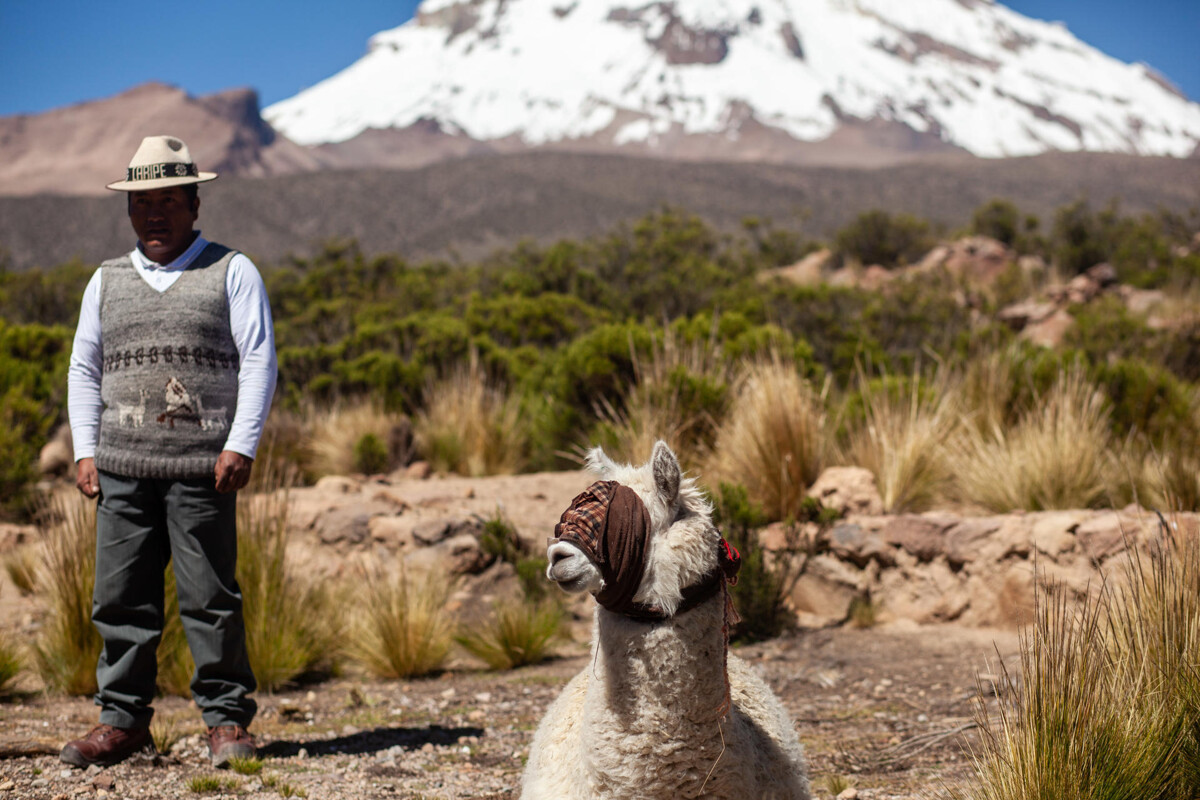
In the Aymara locality of Tomarapi, at the foot of the snowy Sajama, the highest peak in Bolivia, the inhabitants rely on the raising of llamas and alpacas. These animals not only provide them with food, but their wool is also used to make clothing. Additionally, they perform an ancestral ceremony called Wilancha, which consists of the sacrifice of camelids as an offering to Pachamama.
The Wilancha is a deeply rooted tradition in this community, where respect for nature and the spirits of the land is fundamental. During this ceremony, the llamas or alpacas that will be sacrificed are chosen, and gratitude is expressed for their generosity while asking for the fertility of the land and the well-being of the community. It is an act that reflects the deep connection these inhabitants maintain with Mother Earth.
One of the leaders of the Tomarapi community stated: "The Wilancha is a sacred act for us, it is a way of maintaining harmony with nature and showing gratitude for everything it gives us." Although it may be shocking to some, for the people of this region, it is part of their identity and way of life. The ceremony is carried out with great solemnity and respect, and is seen as a moment of communion with the land and the beings that inhabit it.
In short, the Wilancha is much more than a mere animal sacrifice. It is a ceremony loaded with meaning and symbolism, evidencing the close relationship that exists between humans and nature in this community. It serves as a reminder of the importance of respecting and valuing Pachamama, upon whom the life of all beings that inhabit the earth depends.