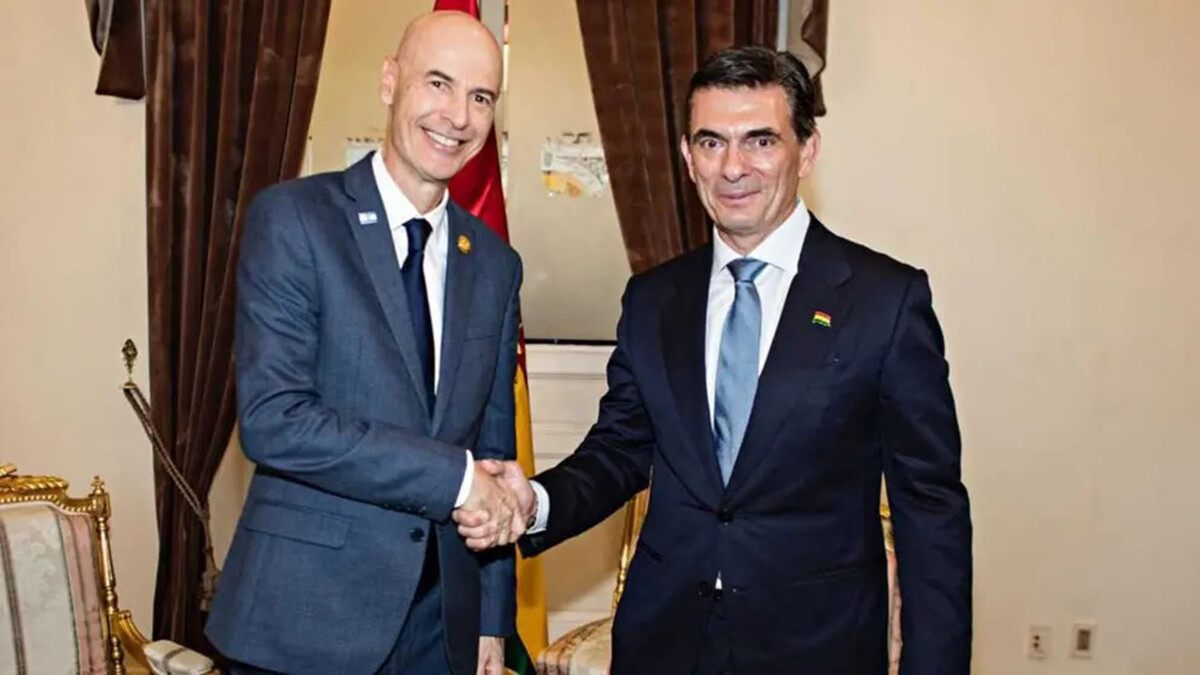
La Paz, November 29, 2025 – Total News Agency-TNA-Bolivia confirmed on November 11 the full resumption of its diplomatic relations with Israel after more than a decade of rupture and strategic alignment with Iran, a shift that represents one of the most relevant movements in its recent foreign policy.
This decision reverses more than a decade of strategic alignment with Iran, with Bolivian governments that, under Evo Morales and then Luis Arce, promoted an openly hostile diplomacy towards Israel and were permissive with actors linked to international terrorism. This resumption is not an isolated fact: it represents a change in geopolitical orientation, an attempt to reposition Bolivia before the West, and a tacit recognition of the risks assumed by becoming a platform for extremist actors linked to Tehran.
For over a decade, the close alignment of La Paz with Iran—added to military cooperation, the opening to operators linked to Hezbollah and Hamas, and affinity with the Bolivarian axis governments—had turned the country into a point of strategic vulnerability within South America.
The Bolivian turn implies several effects for the region:
-
Symbolic relevance in a continent historically permeable to external influences. Bolivia's movement reflects a broader trend: several countries in the region, facing economic and internal security crises, are today seeking greater cooperation with actors who offer technology, intelligence, and stability, such as Israel.
-
Weakening of the Iranian axis in South America. With Bolivia out of the diplomatic circuit that included Venezuela, Nicaragua, and to a lesser extent Cuba, Tehran loses a key partner in the Southern Cone.
-
Reinforcement of regional intelligence cooperation. Normalization with Israel enables Bolivia to re-enter mechanisms of anti-terrorist cooperation and border security. In a continent where the Triple Frontier and the Amazon are areas of high porosity, La Paz's collaboration is crucial for monitoring networks linked to Iran and its proxies.
-
Need to rebuild economic ties. Israel offers cooperation in water technologies, smart agriculture, cybersecurity, defense, and border monitoring—areas in which Bolivia is notably lagging.
-
Geopolitical implications for the region. The resumption of relations has effects on several levels: in the fight against terrorism, in relations with Iran, in Bolivian internal politics, and in regional security.
The New Diplomatic Turn: An Attempt at International Reorientation
The current decision to restore relations with Israel can be understood as the result of three factors:
-
The thwarted attack on the Israeli ambassador in Mexico: a wake-up call. The Iranian plot to assassinate Einat Kranz Neiger, Israel's ambassador to Mexico, recently foiled, reactivated alarms about the Latin American ramifications of Iranian terrorism.
-
Internal risks. The Bolivian government was facing: infiltration of extremist cells, loss of control over border areas, and the risk of Bolivia being used as an operational base in a potential conflict between Iran and Israel.
-
International pressure. The United States, the European Union, and several countries in the region warned that Bolivia was becoming: associated with Iran-Hezbollah-Hamas, isolated from strategic markets, and financially vulnerable.
The 2009 Break: Morales, the anti-Western narrative, and the approach to Tehran
Evo Morales broke relations with Israel in January 2009, citing Israel's military operation in Gaza. However, behind the 'anti-imperialist' rhetoric, there was a strategic component: a structural alignment with Iran. Morales signed military and intelligence cooperation agreements with the Islamic Republic. Tehran financed infrastructure, security, and energy projects in Bolivia. Sectors of the Bolivian Armed Forces received Iranian training and technical assistance disguised as 'scientific cooperation'.
The country became a transit point and refuge for agents linked to Hezbollah, the armed wing of the Iranian regime in Lebanon, and Hamas, an organization designated as terrorist by the US, EU, and Israel. Regional intelligence reports indicated that Bolivia functioned as a logistical platform for movements in the Triple Frontier, a zone of false documentation, facilitated by local networks, and a corridor for money laundering through the informal financial system.
The Arce Period: Continuity of the Iranian apparatus
Although Arce's discourse was more moderate than Morales's, the previously installed structure remained operational. Cooperation agreements with Iran, especially technological and 'border security', continued. The presence of Iranian intelligence operators was detected in Santa Cruz, El Alto, and Cochabamba. Bolivia was integrated into 'gray' trade networks of oil and industrial chemicals used by Tehran to evade sanctions. In parallel, flows of Hezbollah and Hamas militants seeking refuge or transit to Venezuela, Paraguay, Brazil, and Argentina persisted.
Regional Significance for Latin America
The resumption of diplomatic relations between Bolivia and Israel has an impact that far transcends Bolivia's borders and partially reconfigures the Latin American geopolitical map. It not only corrects an internal diplomatic distortion but also alters correlations of power in Latin America and consolidates a clear message: the region is moving towards greater coordination in security and a progressive distancing from Iranian penetration and its associated organizations.
Conclusion
The resumption of relations between Bolivia and Israel marks a profound change in Bolivia's international orientation, after years of alignment with Iran and tolerance towards extremist groups like Hezbollah and Hamas. For the region, this shift weakens the Iranian axis in the Southern Cone and reinforces the Western presence in South America. Despite internal tensions and external pressures, this new direction sets a precedent for governments grappling with divisions between economic pragmatism and ideological radicalism.