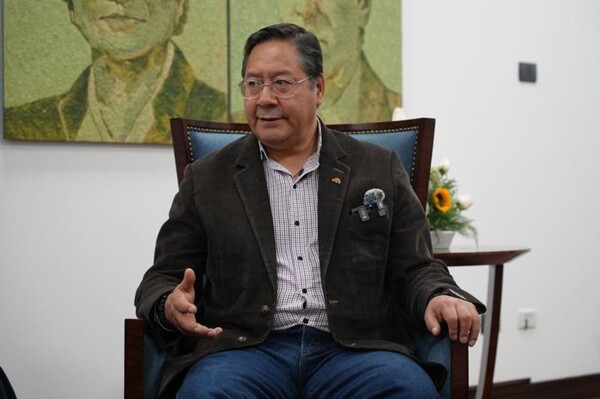
La Paz, November 10, 2025 – Total News Agency-TNA – The new Bolivian president, Rodrigo Paz Pereira, assumes power at a critical moment for the democracy and institutions of this Andean nation.
From this perspective, Paz arrives with a triple expectation: to combat drug trafficking, break with the ideological and financial dependence of the Cuba-Venezuela-Iran axis, and promote an economy open to the global market.
According to analyst Carlos Sánchez Berzaín, the Bolivian crisis is explained by the destruction of institutions from the plurinational state, the depletion of state resources, the lack of dollars, and the delivery of natural resources.
He points out that Bolivia must abandon the narco-state and recover the republic to again speak of an economic policy based on investment, transparency, and respect for private property.
The new president starts with powerful cards: he announced that at his inauguration, the governments of Cuba, Venezuela, and Nicaragua will not be invited, symbolically placing the first margins of rupture with the ideological axis that marked the country's foreign policy for years.
His main challenge is not only to govern, but to decide whether he will dismantle the network that he himself and various analysts identify as a genuine criminal system, articulated between criminal groups, state networks, and regimes like those of Cuba, Venezuela, and even Iran, or if he opts to restore the foundations of a democratic republic.
In the 2025 general elections, Bolivia experienced two major milestones: the total renewal of its parliament and the departure from power of the Movement for Socialism (MAS) after more than two decades of hegemony.
Paz, considered until recently a lagging candidate in the polls, first obtained a majority in the first round and then triumphed in the second round with approximately 54% of the vote.
The electoral victory of the centrist candidate marks a radical shift in the Bolivian political model: for the first time, a transfer of power via runoff is completed, and the era of MAS as the dominant party seems to have come to an end.
The economy mired in crisis —scarce credit, high inflation, fuel scarcity, and depletion of the state— was the main motivation that got citizens out of the mantra of the "useful vote" or "the lesser evil" that dominated previous elections.
In this context, the narrative emerged that Bolivia had become a narco-state where drugs, corruption, and foreign interference wove a parallel system to the State.
With this, he calls on the private sector, promotes investment, and seeks to reactivate the economy under the premise of "capitalism for all."
Nevertheless, the task is monumental.
But promises are not enough: what is at stake is the restoration of the republic and the end of a system that, according to critics, mutated into a narco-state.
The answer will depend not only on his will or leadership, but on citizen accompaniment and the capacity for institutional reconstruction.